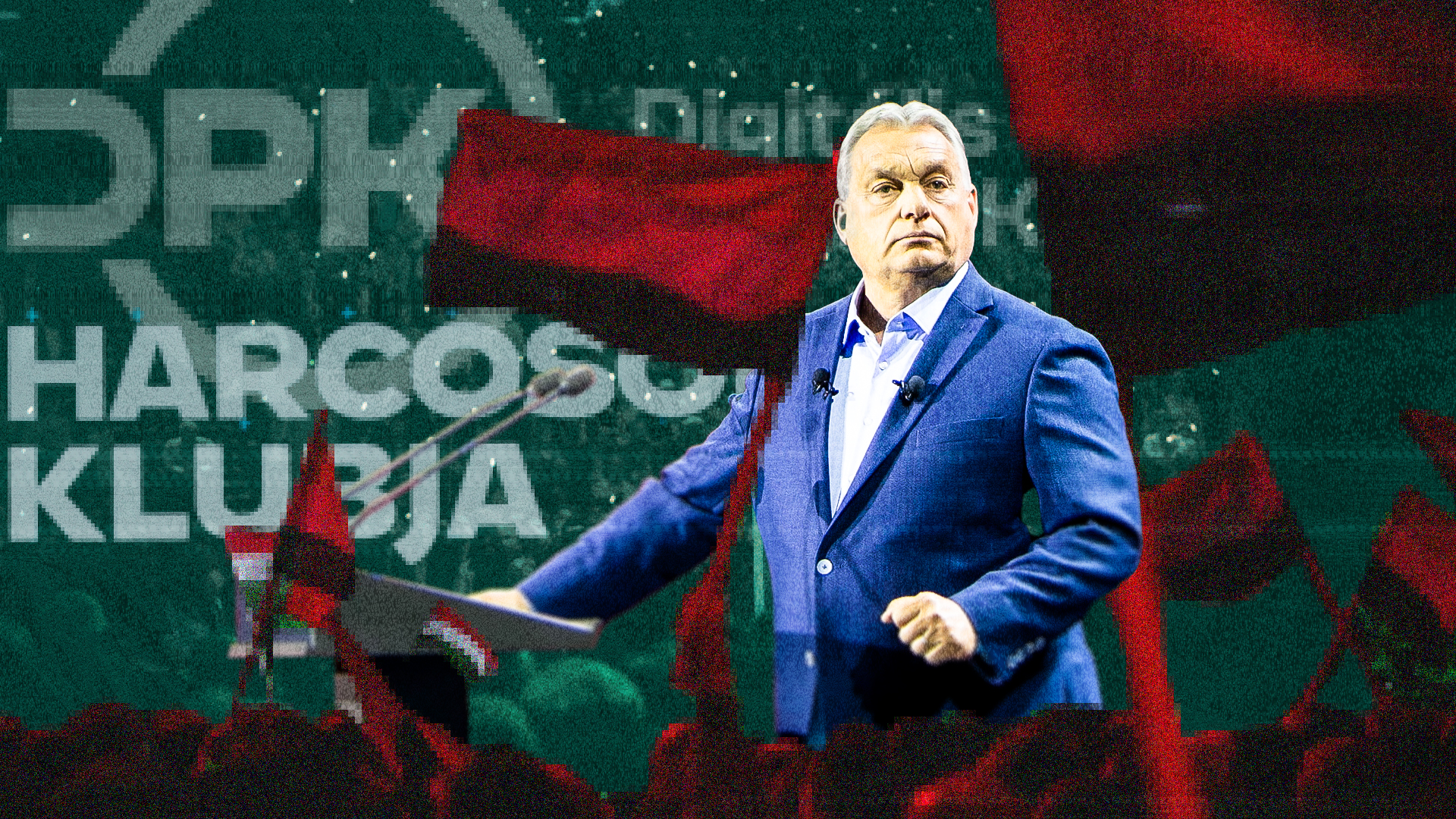
Viktor Orbán takes control of his re-election campaign himself and lays his cards on the table
- Since spring, Viktor Orbán has been steering his re-election campaign himself.
- Even the organization of the so-called Fight Club, a nationwide online community of Fidesz-supporters, was his idea.
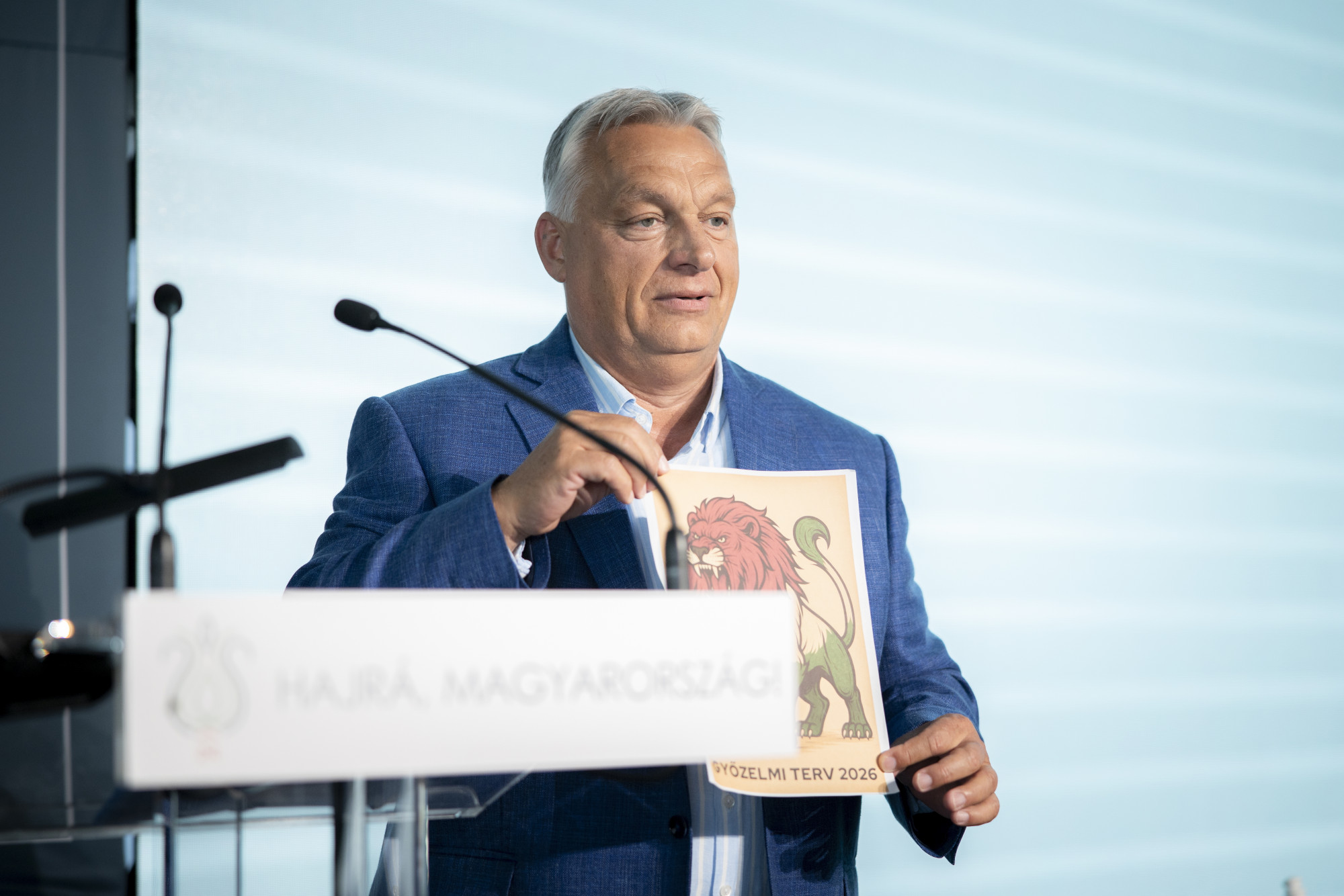
- The new policy of the campaign is that this is no longer a battle of narratives, but instead "every day must be won."
- Campaign manager Balázs Orbán is building a war room based on the American model to direct his teams from there. Judit Varga, former Minister of Justice, and Donald Trump are also being persuaded to help Fidesz.
- In a single year, Péter Magyar’s new opposition party, Tisza has caught up with Fidesz.
- Fidesz now wants to convince their supporters that the party is still as dominant as it used to be and that Orbán is still the same strongman.
Viktor Orbán is kicking off his campaign, which began on 7 September with a Civic Picnic in Kötcse, with a new lineup. As we predicted the week before the picnic, and as the Prime Minister himself announced to his entourage over the weekend, his political director, Balázs Orbán will lead Fidesz's campaign. Balázs Orbán is building his own team, which includes previous staff members, but also new faces, such as American pollsters, or research analysts, working for the party. However, Antal Rogán, Minister of the Prime Minister's Cabinet Office who has played a key role in organizing communications for decades, will not have a key role in the current campaign. This is a big change compared to the last four parliamentary elections.
The core of Fidesz's campaign team has remained unchanged since the (lost) 2006 election. The memorable "We are worse off than four years ago" depression campaign was led by Rogán who was also supported by spin doctor Árpád Habony's personalized advice. That year, tabloid journalist Fanny Kaminski (Árpád Habony's now ex-wife) joined the team as press officer, and the tabloidization of the party's communications began. András Gyürk, who had already led the party's European Parliamentary election campaign in 2004 (and then became a Member of the EP), has been a member of the campaign team ever since. Another member of the team that has grown together over the decades is János Nagy, who was head of the president's cabinet then and since became Viktor Orbán's first secretary in the government and is now State Secretary directing the Prime Minister's Office. Last but not least, Bertalan Havasi should also be mentioned, who headed Orbán's press office for fifteen years and still works with the team today.
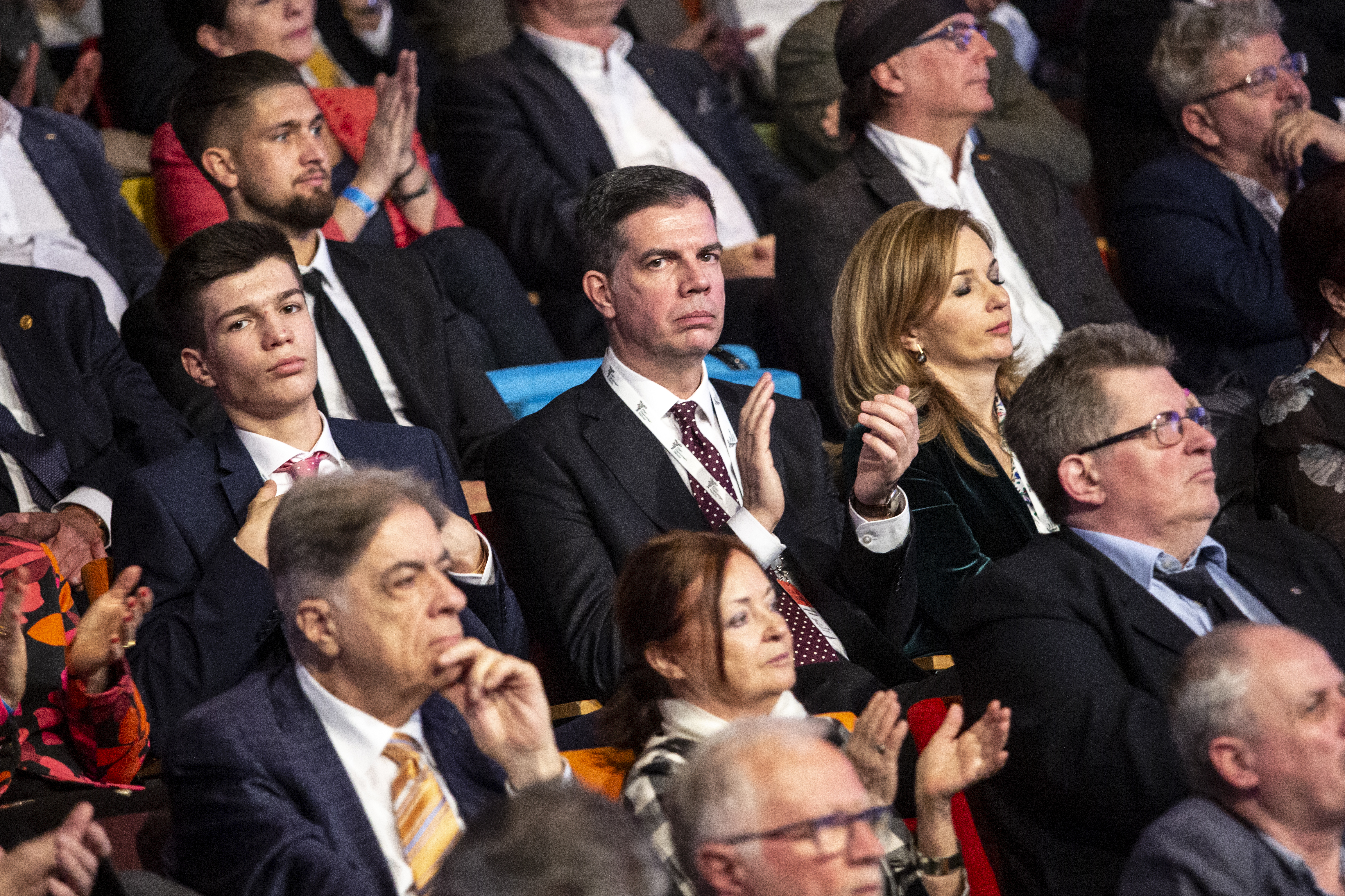
Since 2010, András Gyürk has been the formal leader of the campaigns. Gyürk, who has been working in Brussels at the European Parliament for twenty years, built Fidelitas – the youth organization of Fidesz - together with Rogán in the mid-1990s. They became active in national politics together and they have remained friends and allies ever since. Gyürk returned to Hungary for the campaigns but always directed the work from behind the scenes. He never gave interviews, avoided the public eye – and he just won, won, and won. His role was less strategic and more operational. His team was joined by Gábor Kubatov, who was responsible for organizational issues. From 2008, Kubatov was also a contact person to Arthur Finkelstein and his American team, who provided Orbán and his entourage with decisive advice in the first half of the 2010s. This team has since delivered four wins with a two-thirds majority for Fidesz.
Nevertheless, this year Orbán has made significant changes. Not only has he replaced the leader of the campaign, but he has also changed almost his entire communications strategy.
The twilight of narratives?
Since 2008 – the arrival of Arthur Finkelstein and other advisors linked to the Republican Party – it has always been the big narratives that have won elections for Fidesz. The 2008 referendum was about the austerity measures that the banker government wanted to introduce. The 2010 parliamentary elections were focusing on the "past eight years" of socialist governance, 2014 was about utility price cuts, 2018 was about the threat of migration, and 2022 was about war. In every cycle, Orbán has been able to construct or emphasize a narrative that targeted the existential fears of the masses. He was telling his stories without restraint in the expanding government-controlled media.
His narrative politics were also aided by the opposition's impotence. Former socialist Prime Minister Ferenc Gyurcsány shackled the left and remained an unavoidable figure even after 2010. Through enacting changes to the electoral system, Fidesz created a situation in which only the opposition's (impossible) cooperation could rattle the dominance of the governing party. The "Gyurcsányization" of opponents – connecting or comparing them to the former PM - proved to be an effective weapon over several cycles. Orbán already predicted in his speech in Kötcse in September 2009 that the system dominated by two major parties would cease to exist and be replaced by a structure organized around one major party, that is: "a central political force field is emerging (and) there is a realistic possibility that the next 15-20 years of Hungarian politics will not be determined by a dual force field." And this is exactly what happened.
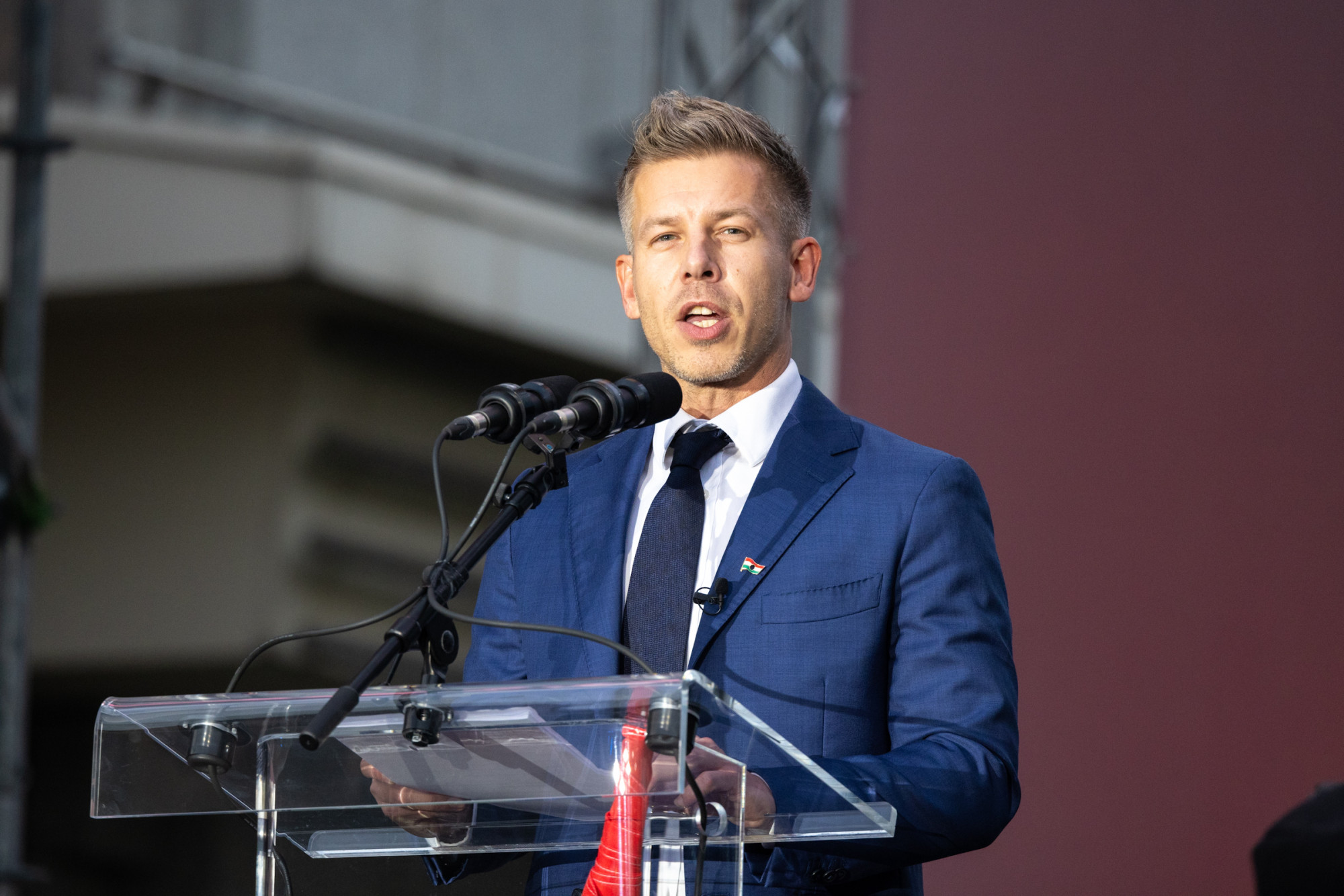
This balance was disrupted in February 2024, when Hungary’s President Katalin Novák and Judit Varga Minister of Justice both resigned after a scandal caused by a presidential pardon granted to a man who was involved in a child sexual abuse case. A political earthquake began and Péter Magyar, the ex-husband of Judit Varga, took the lead. Turning his back on the Fidesz political family in a spectacular fashion, Magyar gained incredible attention and popularity within just a few months. In a single year, the left-wing establishment ceased to exist; Péter Magyar and his new Tisza party filled the void. The tried-and-tested communication panels do not work against him. Magyar knows Fidesz's know-how from the inside, uses traditional right-wing symbols, and began to copy Orbán's post-2002 opposition strategy, cleverly avoiding the traps that might lead to symbolic battles – and he quickly gained popularity by ritualizing politics. He was able to expand his reach both “on the streets” and online while traveling around the country. Fidesz is not accustomed to such intense opposition.
The pro-government media tried to find something to pin on Magyar, labelling him a “soccer wife,” an aggressive wife beater, and then a “slim-fit wearing, latte avocado” politican. They even attempted to involve his ex-wife, Judit Varga to attack him, but to no avail. All the government’s traditional weapons proved to be ineffective. Magyar's popularity continued to rise unabated; he founded a party, and the summer of 2024 had gained national recognition. The first polls appeared in October 2024, showing Magyar’s Tisza party in the lead. There had been no precedent for this in Hungary in 15 years. On October 23, Orbán sent a combative, almost hateful message to his challenger in his speech, telling him to get lost. His threats proved fruitless.
Over the past few weeks, we have had background discussions with five sources who have some insight into Fidesz's campaign. We tried to find out from them how Péter Magyar’s growing popularity urged Fidesz to correct (or try to correct) its strategy. All of them agreed to talk on the condition that we did not reveal their identities and ensured that they could not be identified. Two of them hold government positions, while two belong to Fidesz's inner circle, which is how they obtain their information.
According to one of our sources with insight into the campaign activities, after the leak of an audio recording from Magyar’s former girlfriend, Evelin Vogel, last fall, it became clear to the Fidesz campaign that voter perception had changed and that sooner or later new methods would be needed. By then, Tisza had caught up with Fidesz in polls. In the recording, Magyar spoke ill about pensioners and called his own supporters "stinky". Fidesz mobilized significant resources to make a big deal out of the affair: the public media and the pro-government newspaper Magyar Nemzet found the recording outrageous and Orbán even quoted from the recordings (although without mentioning Magyar's name, of course). According to inside polls, all of this had no effect whatsoever, and Tisza’s popularity remained unbroken. The matter sank into oblivion within days.
Intense deliberations in the inner circles of Orbán about the need to modify the communication strategy began in January. A government source emphasized in this regard that there are no "yes men" in Orbán's immediate circle, which means that from the people he works with on a daily basis he explicitly expects critical thinking about his own communication.
"He means what he said to Katalin Novák at last year's annual review: no matter how high your position, you can never be smart enough on your own to know everything best," said a government source, who believes that regardless of what Orbán communicates to the public, he is aware of the real data. For Fidesz, surveys involving thousands of people are conducted every three days using the American survey method, i.e., questionnaires. These are carefully analysed by pollsters (research analysts). The surveys do not include only popularity data, but also the assessment of individual issues, actors and the analysis of trends.
It is not typical for Viktor Orbán to make important decisions slowly, but that is what happened this time. It was a process that took weeks.
He is now forced to dismantle the image he has built up over several cycles. The strong man of Europe had to realize that he has to descend to the national scene and sink into the swamp of everyday political battles.
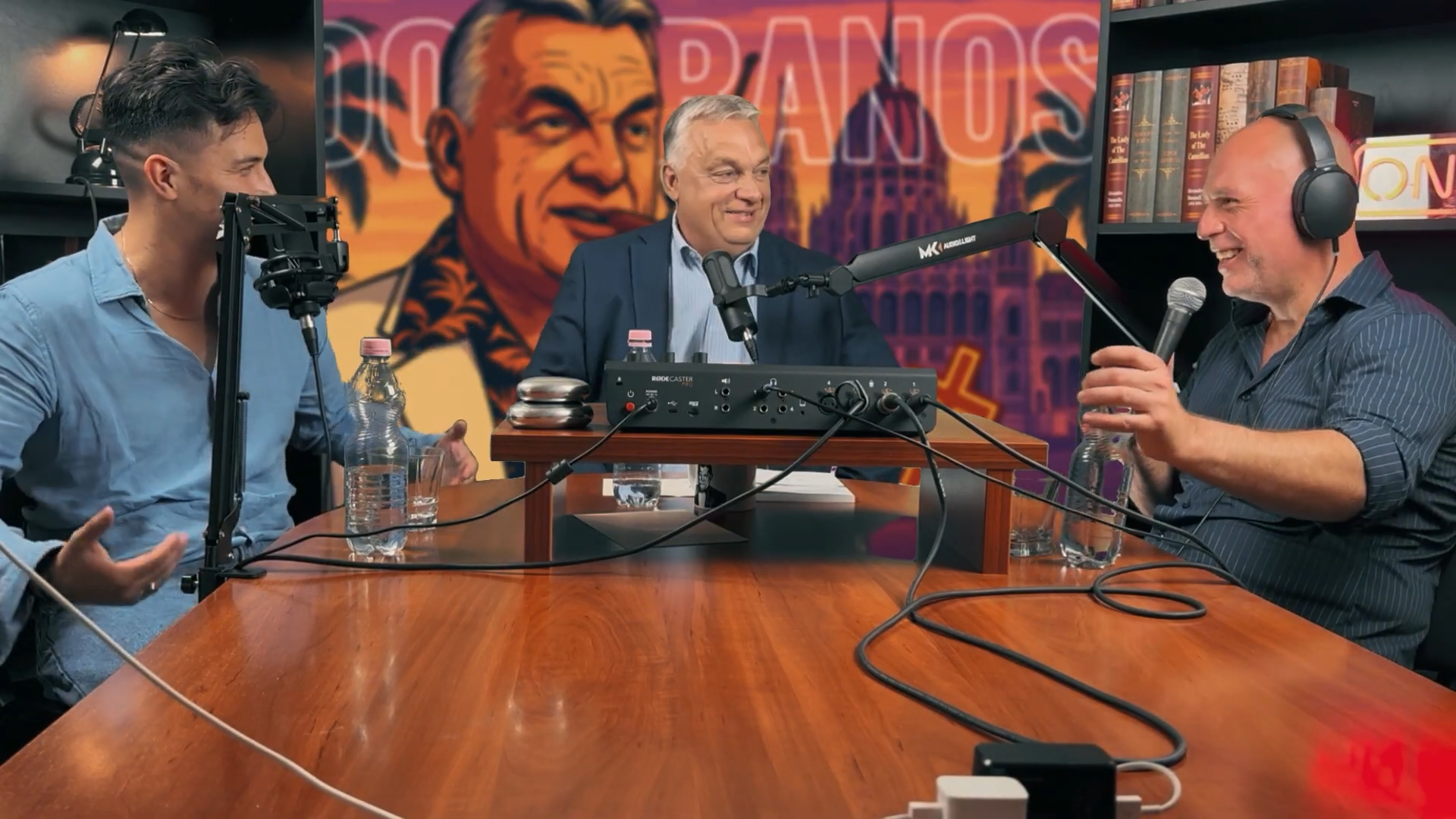
A government source highlighted the first interview with András Hont, right-wing journalist, which Orbán had agreed to the previous evening on an ad hoc basis. From then on, he consciously shaped his public appearances, became more direct, defended himself when it was necessary, took more risks, and "descended from the Karmelita monastery" – headquarters of the Prime Minister’s Office - as one source active in the campaign put it. The desperate transformation also affected politics, or at least it was reflected in government decisions. In the first half of the year, Orbán made some seemingly serious mistakes, starting with his unfulfilled threats about banning Budapest Pride, followed by the so-called transparency law, which met with unexpected resistance, and to which Tisza did not react as expected. This was followed by Orbán’s praise of Romania’s far-right presidential candidate and the success of the documentary called Dynasty, that revealed how the Orbán-family accumulated wealth and power in the past decade or so. According to the latest data, the party's decline in popularity was finally halted in the summer, as confirmed by independent research institutes such as Median and 21.
No one in the Karmelita dares to declare, and Orbán also denies that Magyar's rise of popularity has led to the rethinking of the communication strategy.
Admitting that Fidesz might be forced to adapt to its opponent is considered taboo in Orbán's circle.
Orbán reiterated in Kötcse that "they cannot be forced to do anything" and that they only made the event public to hold a mirror to the secretive Tisza-party. The digital hype and communication restructuring that has been noticeable in recent months is intended to conceal this very reality within the party – that the Prime Minister has found a tough opponent. They are forced to fight in Magyar’s style.
Since spring, Orbán has been talking regularly about how the nature of politics has changed – it has "moved into the virtual space." Apparently, this is why he started "catching flies": why he went on a podcast tour, why he created the Fight Club and the Digital Civic Circles, why he is friends with the rapper Dopeman and why he even responds to articles on 444. This explains why he responds to even the most sensitive issues, such as when he began to stutter in Brussels or what kind of palace is being built on his family’s estate, on Hatvanpuszta. His communication towards Magyar has also visibly changed. Last year, he didn't even mention his name, today he talks about him in Facebook posts, referring to him as a "virtual opponent," someone who only exists in the online space and has no real organization behind him.
Modern politics is indeed undergoing a transformation, and in Hungary it was Magyar's aggressive comment policy that has drawn attention to this. According to one of our government sources, the most important lesson is that the shelf life of news has shortened dramatically:
"What is news at 7 a.m. is often forgotten by noon. Today, it is no longer just big narratives that are fighting for attention. Those still need to be built, but that is no longer enough to win. There are daily battles that differ from the big narratives in their subjects. And those battles must be won every day, or at least a tie should be achieved."
The opponent is entirely different than the one four years ago, said another informant involved in the campaign. Péter Márki-Zay, Orbán’s only potential contender before the last elections, could be disregarded as someone who does not play in the same league as Orbán, but this is no longer possible with Magyar. It is a difficult case because “his character assassination – i.e. comparing him to Gyurcsány - has been beyond the limits of credibility from the very beginning.”
Magyar is forcing the Fidesz campaign to adopt a new strategy – this is trying to be covered up with arguments about the "twilight of narratives," behind which lies the fact that
the Russian-Ukrainian conflict is simply not a prominent enough issue on people's list of concerns.
People are more interested in how much money they have left in their pockets at the end of the month. The motto "every day must be won" has become something of a catchphrase in the campaign environment, coming up in several background discussions. A pro-government analyst put it in his own words:
"mudslinging is not effective anymore, shouting louder. is"
Viktor Orbán personally catalysed the change, this is why he repeated in Kötcse that policy debates must be taken on, online battles must be fought, and everyone, not just him, must go out onto the battlefield and roll up their sleeves. Parallel to the transformation of his own role, he also took control. Most of his Facebook posts are devised together with press secretary Fanny Kaminski, whose role has become much more important over the past two years. She understands how modern media works; therefore the Prime Minister relies on her insights on creative issues. Allegedly, the Fight Club – at least the formation – was Orbán's own idea, at least two of our sources familiar with the campaign said that the Prime Minister unexpectedly came up with the idea of recruiting volunteers live.
Suitability campaign
The appointment of Balázs Orbán also indicates that the Prime Minister has taken control of the campaign into his own hands. Over the past two years, Balázs Orbán has clearly become Viktor Orbán's closest associate. Not only did he accompany the PM to Croatia, but he also keeps him close, almost like a secretary, sitting next to him at government meetings and he is often called to the Karmelita on weekends to work with the Prime Minister. Viktor Orbán often changes the people he trusts: there have been several powerful figures, from János Lázár to Gergely Gulyás to Antal Rogán. There is also a generational reason for this latest change: Balázs Orbán is younger than the previous top ministers. As head of the MCC – a Fidesz-related talent development program - he is responsible for integrating the younger generations, so Viktor Orbán expects new impulses from him.
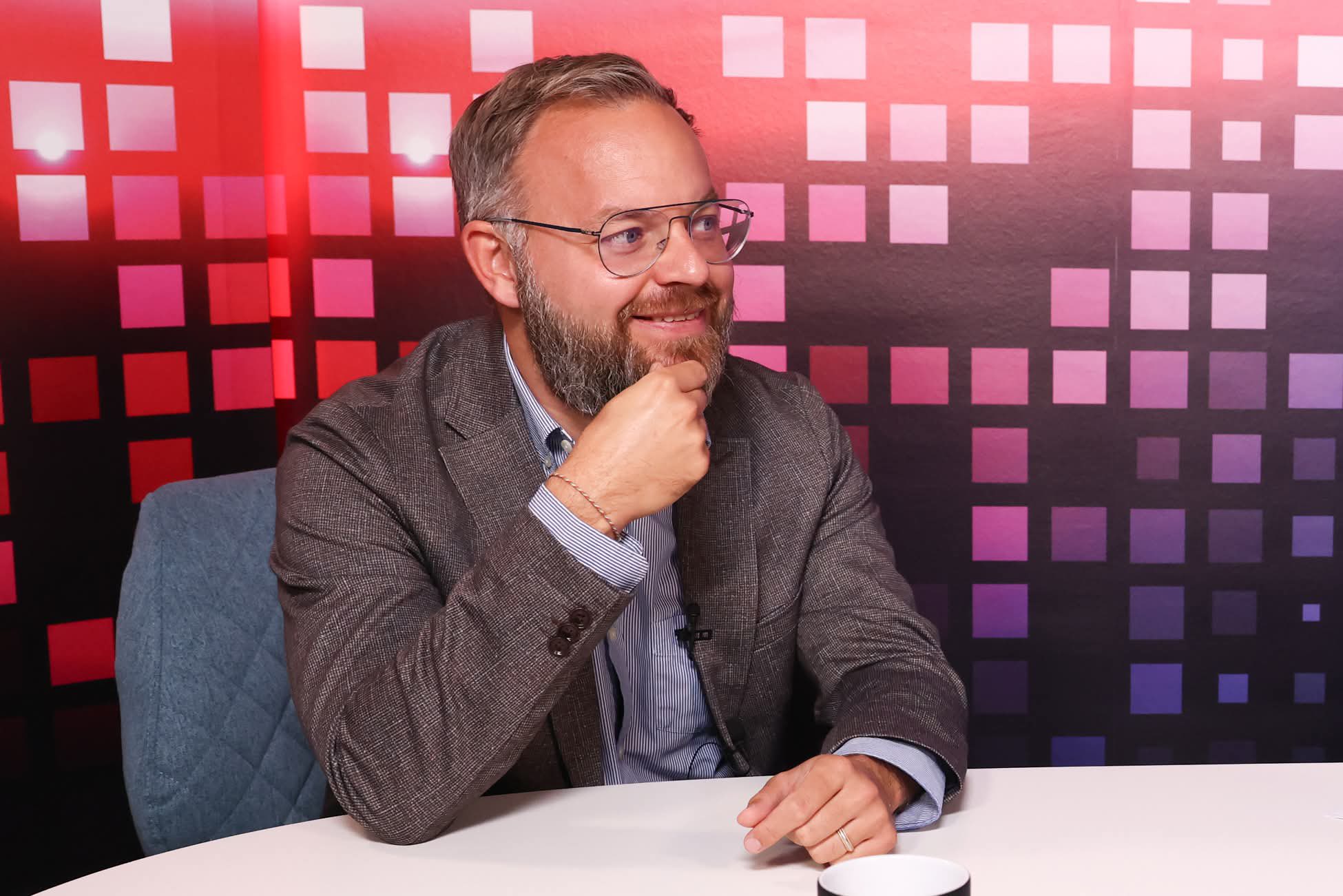
Balázs Orbán surrounds himself with his own subordinates; one of his most important supporters is Bence Partos of the MCC, who oversees the Digital Civic Circles. He also maintains contact with American think tanks, whose role has become more important in Viktor Orbán's eyes since Donald Trump's victory. Perhaps this American fever is the reason why Balázs Orbán wants to run the campaign from a 24/7 war room modelled on the American example, from where he can respond to current developments at any time. This American connection no longer involves specific daily advice, but rather methodological assistance with research.
"We learned everything from Arthur (Finkelstein). There has been no one of his caliber since his death,"
said one of the campaign contributors. The identities of those involved are kept a secret, but one source acknowledged that Republican pollster John McLaughlin, who participated in the 2022 campaign, remains active in the inner circle. The team is lobbying for a Trump-Orbán meeting, if not face to face, then at least in sufficiently illustrious surroundings, which could give the campaign a boost.
Gergely Gulyás, Minister of the Prime Minister's Office, is not participating in the campaign; he is now only entrusted with holding the weekly government information session. According to the good-faith interpretation, this withdrawal can be explained by the fact that he recently became a father, but the more realistic version, as a government source put it, is that "if a friend of mine – meaning Magyar - who was brought into Fidesz by me built a 40 percent party from scratch, I would hide too."
Antal Rogán is now "helping from a distance," consulting with Orbán personally instead of attending meetings. His task (together with Gyürk) is more about strategy building and implementing creative concepts in case an unexpected turn of events disturbed the campaign schedule, so he is currently less involved in day-to-day operations. Gábor Kubatov, party director of Fidesz, will play an important role in coordination and the management of individual districts on the party side, while Dávid Héjj, the government's coordinating commissioner, will do the same on the government side. Orbán is also counting on Minister of Construction and Transportation, János Lázár for communication, and two sources have indicated that they are persuading Judit Varga to return, if not formally, then at least in the communication sphere. The former Minister of Justice is reportedly very popular in Fidesz circles since she called Péter Magyar a "creature" after her testimony to the prosecutor's office in a corruption case.
The change – that is, the appointment of Balázs Orbán and the demotion of Gyürk – creates some uncertainty in the system. Balázs Orbán is not a controversial figure, but he is not particularly popular within Fidesz either; it was his confidential relationship with the Prime Minister that paved his way to his current position. By taking control of the campaign into his own hands, Viktor Orbán is inadvertently sending the message that the situation is dangerous and new impetus is needed. But there isn't much of that, and it would be surprising if Balázs Orbán were to provide it. Uncertainty has been palpable around the camp since the beginning of the year, and it is no coincidence that new mobilizing events, peace marches, and civic circles are needed. When Orbán has to explain himself because of his stuttering or the developments of Hatvanpuszta, it is fuelled by the fear that the confidence of his own camp is wavering. The threats made in his speech in Kötcse can also be traced back to this.
Fidesz is now primarily trying to undermine Magyar's ability to govern. This is justified by an (alleged) internal survey, which suggests that although Magyar is more popular than Orbán, there are doubts about his ability to fulfil government tasks. The Prime Minister also spoke about this in the third part of his speech in Kötcse, when he emphasized the importance of demonstrating the ability to govern and portrayed Magyar as a "troublemaker" and a "little cockerel."
There seems to be some general agreement about Péter Magyar among those running the campaign. It looks like this is what holds the party together:
"Magyar is a cretin who cannot be trusted with the fate of a country on the brink of war. This is our primary narrative. The Fidesz majority really believes this is true,"
said a source familiar with the campaign bluntly, adding that any unexpected war-related event could amplify this image. According to another government source, there is a core group that is personally motivated to prevent Magyar (i.e., the "traitor") from coming to power.
In any case, Orbán has to take a risk. And the biggest risk Orbán is taking in this situation is laying his cards on the table.
In his speech in Kötcse, for example, he outlined step by step exactly what kind of campaign he is preparing: he listed at length the schedule of welfare measures, from the Home Start programme to family tax breaks and pension supplements. He revealed that communication will be based on the trust-based nature of politics, and that there would also be a national consultation. He has never done this before: he has always made sure that his strategy remained behind the scenes.
With this move, he tried to prove to his supporters that he was in control of the situation and that Fidesz was still the favourite in the elections race.
That is why he stated that the opposition had already come up with the two most important slogans of the campaign—referring to Tisza Vice-President Zoltán Tarr’s statements on his party’s alleged plans to introduce a progressive tax system—and that they would build their communication and the upcoming national consultation on these issues in the coming weeks and months.
It remains to be seen whether this will really bring about a breakthrough or not, but for now, it seems that Fidesz has found something to latch onto. (We highly recommend Sándor Czinkóczi's article on the Tarr story.) Through the issue of progressive taxation, they can attack Tisza on the topic that has been their protected territory until now: livelihoods – the issue that concerns voters the most. And they are shooting indeed. On Orbán's Facebook page alone, the ruling party spent 3 million forints to ensure that Tarr's words reached everyone. Magyar was forced into a defensive position: he launched his own salary calculator and telephone campaign and started talking about tax cuts, but after Tarr's quoted statements, Tisza is not in an easy position in this matter.
In response, Magyar's party organized a meeting at the same time and place Orbán's picnic in Kötcse was held. All signs indicate that the scenario for the coming months will follow the same pattern: no single blow, move, or initiative will go unanswered. From now on until mid-April, everyone will want to win every day.
- This article was originally published in Hungarian on 444 on September 11, 2025.”
- Translation by Veronika Czina.
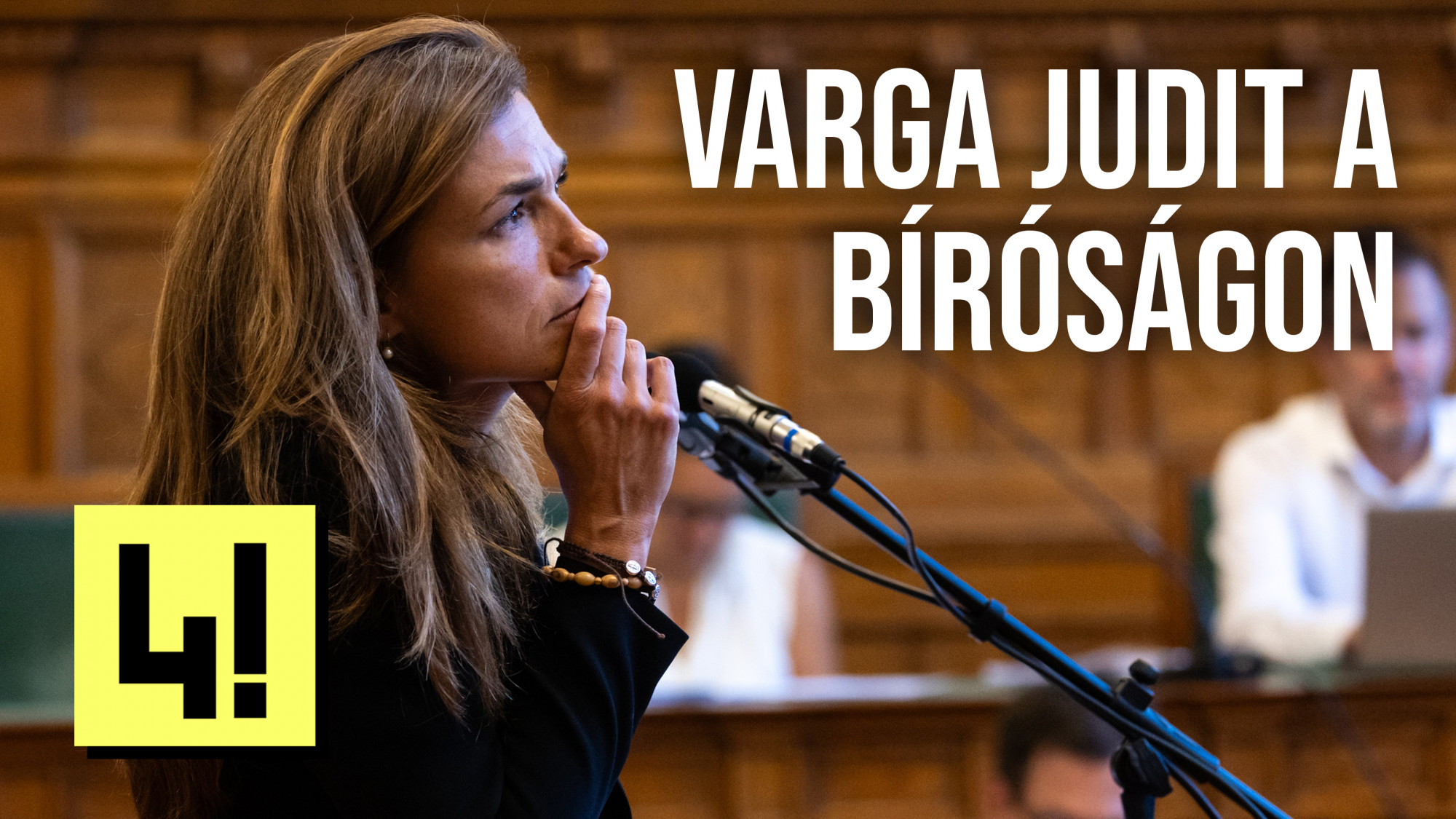
„Nem láthattam, Völner mit csinál a magánéleti ügyeiben”
Megmutatjuk videón is Varga Judit tanúvallomásának részleteit és azt is, mit mondott újságíróknak a tárgyalás után.



Orbán Trump egyik kedvenc amerikai tanácsadójával készül a választásra
John McLaughlin a Fideszben félistenként tisztelt Arthur Finkelstein tanítványa, de eredményei messze elmaradnak mesterétől. Talán mert szereti azt hangoztatni, amit a megrendelő hallani akar.


A volt mandineres Partos Bence cége világítja át azt, aki Orbán digitális polgári köreibe jelentkezik
„Az adatkezelő a rendelkezésére álló adatokból érintetti profilt alkothat.”
Létbizonytalansági kampánnyal csapott le a Fidesz a Tisza Párt politikai hibájára
Magyar Péterék először kényszerültek védekezésre a kormányerőkkel szemben, ráadásul pont a legkényesebb területen. Ezért valami nagyot kell dobniuk Kötcsén, ha vissza akarják szerezni a kezdeményezést.
